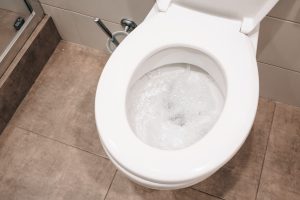
You flush the toilet, and instead of a clean, quiet drain, you hear it. A low gurgling. A few lazy bubbles rising up through the bowl. Maybe it happens every time. Maybe it comes and goes. Either way, it doesn't feel right—because it isn't.
A toilet bubbles when flushed for a reason, and that reason is almost never the toilet itself. What you're actually watching is air escaping from somewhere it shouldn't be. That distinction matters because it changes where the problem lives and how serious it might be.
Here's what's actually going on.
Quick Answer to a Bubbling Toilet
- A bubbling or gurgling toilet usually signals a problem with your drain venting system, not the toilet bowl
- A toilet gurgling sound can also mean a partial or developing clog in your drain or sewer line
- Left alone, venting problems tend to get worse and don't clear on their own
- If multiple fixtures are involved, it's worth having a plumber inspect the sewer line
- Toilets that are old, cracked, or constantly running may need replacement, not just repair
Why Does My Toilet Bubble in the First Place?
Your plumbing system isn't just a network of water lines. It's also a network of air. Every drain in your home relies on a steady supply of air pressure to move waste through the pipes cleanly. Without that airflow, drains slow down, back up, or produce that unmistakable gurgling sound.
When air can't move freely through your vent pipes, it finds another path out. That path is often the nearest drain, which in many homes is the toilet. So when the toilet bubbles when flushed, you're watching displaced air push back through the only opening available.
Think of it like putting your thumb over the end of a straw. The liquid doesn't flow the way it should. Your plumbing works the same way.
The Venting System: What It Does and What Goes Wrong
Every home's drain system connects to a vent stack, a vertical pipe that runs through the walls and exits through the roof. This stack keeps air pressure balanced across your entire drain system.
When that vent gets blocked, the whole system feels it. Common culprits include debris that blows in from the roof opening, birds building nests near the vent cap, leaves packing in during fall, and, in Michigan winters, ice forming at the top of the stack and sealing it shut.
A blocked vent stack creates negative pressure throughout your drains. That's when you start hearing the toilet gurgling sound after someone takes a shower, or notice that the kitchen sink gurgles right after the washing machine drains. The fixtures are competing for the same limited air supply.
This type of problem is worth addressing promptly. Continued negative pressure puts strain on drain seals and can eventually pull water out of P-traps, which are the curved sections under sinks that block sewer gases from entering your home.
When It's More Than a Vent Issue: Signs of a Sewer Line Clog
Venting problems and sewer line problems can look similar from the inside of your home, but one is considerably more urgent than the other.
Here are the clearest signs of a sewer line clog rather than a simple vent blockage:
Multiple drains are slow or gurgling at the same time
When one toilet gurgles, it may be a localized issue. When the toilet, the bathroom sink, and the tub are all draining slowly in the same area of the house, a deeper blockage in the shared drain line is likely the cause.
Water backs up in unexpected places
Running the kitchen sink causes the toilet to bubble. Flushing the toilet sends water up into the bathtub drain. This cross-fixture activity points directly to a sewer line problem somewhere downstream.
You notice an odor near your drains
Sewer gas is the byproduct of a system that isn't venting or draining the way it should. A persistent smell near floor drains or low-lying fixtures is worth taking seriously.
The problem keeps returning after you've cleared a clog
If the same drain clogs repeatedly within weeks of being cleared, there's usually a structural issue in the line, such as root intrusion, a collapsed section, or heavy grease buildup that hasn't been fully removed.
Sewer line problems rarely announce themselves dramatically at first. They tend to build slowly. The earlier a blockage is identified through camera inspection, the less disruption the repair typically involves.
Repair or Replace? How to Know If You Need a New Toilet
Sometimes a gurgling toilet leads to a broader conversation about the toilet itself. If your toilet is older or has a history of problems, it's worth asking whether repair makes more sense than replacement.
How long do toilets last?
A well-maintained toilet can last 25 years or more, but the internal components wear out long before the porcelain does. Flappers, fill valves, flush handles, and seals typically need attention every 5 to 10 years. The bowl and tank themselves are durable, but cracks, persistent leaks at the base, or a toilet that rocks slightly when you sit on it are all signs of a more involved repair or full replacement.
Here's a straightforward way to think about it:
Repair makes sense when the problem is a specific, isolated component, like a running toilet, a weak flush, or a flapper that won't seal. These are inexpensive fixes that add years of reliable use.
Replacement makes more sense when the toilet is 20 or more years old, has visible cracks in the porcelain, constantly needs new parts, or uses older high-gallon flush technology. Newer toilets use significantly less water per flush, which adds up to real savings on water bills over time.
If you're wondering how to know if you need a new toilet, the honest answer is: a plumber can usually tell you in about five minutes. A quick inspection of the toilet's condition and its connection to the drain system takes the guesswork out of it.
When to Call Rooter MD
A one-time toilet gurgling sound after a large flush may not be cause for concern. But if the bubbling happens regularly, involves more than one fixture, or comes with slow drains or unusual odors, it's worth having the team at Rooter MD take a look.
The goal of a diagnostic visit isn't to immediately recommend a major repair. It's to find out exactly where the problem is originating. Common problems we see are a partially blocked vent stack, a developing clog in the drain line, or the beginning of a sewer line issue that's far easier to address now than six months from now.
Early inspection consistently costs less than emergency repair. That's true for nearly every plumbing issue, and sewer and drain problems are no exception.
Stop Guessing. Start Fixing. Call The Royal Flush of Local Plumbers Today!
If your toilet has been bubbling or making a gurgling sound, we can find out why. The Rooter MD team will diagnose what's driving it, explain what we find in plain terms, and give you clear options for moving forward.
Every job starts with an honest assessment of what actually needs to be done. Get in touch with us, and we'll get to the bottom of it.